
Sex Offender Checks in Hopkins County
The official starting point is the free Texas Public Sex Offender Registry search. Texas DPS gathers data sent by the local agency that registers each person. For a Hopkins County search, the county filter is useful when the exact home city is unknown. A city or address search is better for a defined area. Name search works when the person is known, but aliases and similar names make the full profile vital. The registry, not a copied list, supplies the current public status and the name of the registering agency.
The Hopkins County Sheriff becomes the local authority for a registrant who lives outside a municipality. Within Sulphur Springs or Cumby, the city police authority is the first contact. Registration questions should follow that split. The county does not publish separate appointment hours or a named registry deputy, so call before visiting. For suspected noncompliance, contact the agency shown on the profile. Call 911 only when there is an emergency, not to ask about a routine registry entry.
How to Search the Texas Public Sex Offender Registry
The DPS search supports both person-based and place-based checks. Start narrowly when reliable details are known, then widen the query if no match appears. A place search can cover Hopkins County as a whole or focus on Sulphur Springs, Cumby, Como, a ZIP code, or a street area. Live radius choices should be read from the current screen because DPS can change interface options. Basic public searching does not require an account, although DPS describes account-based subscription or download functions.
- Open the official DPS registry and read the conditions for public use before submitting a search.
- Choose a name or place route. Enter Hopkins County, a city, an address, or a ZIP code as the question requires.
- Use first name, last name, and other visible filters to narrow a person search. Do not assume the first similar name is the right profile.
- Open the complete profile. Check its date, address status, compliance status, offense information, and registering agency together.
| Field Label | Type | Required | Notes |
|---|---|---|---|
| Last Name | Text | Search-path dependent | Used for a name search |
| First Name | Text | Optional | Narrows a name result |
| Address | Text | Address-search dependent | Adds street and city context |
| City | Text or dropdown | Optional | Use Sulphur Springs, Cumby, or Como when applicable |
| County | Dropdown | Optional | Select Hopkins |
| ZIP Code | Text | Optional | Narrows a geographic search |
| Radius | Dropdown | Address-search dependent | Confirm current choices on the live form |
| Map or List | View control | No | Switches between geographic and tabular results |
Hopkins County Map and Name Searches
A name search and map search answer different questions. The name route is best for confirming whether a known person has a public Hopkins County profile. Use the most complete name available and compare the record details. The map route is useful for community awareness around a known point, but distance on a screen does not establish a person's current conduct or level of danger. Address verification and status can change.
The Texas registry interface shows why both views matter. Its map gives place context, while the list and profile carry the text needed to read the result responsibly.
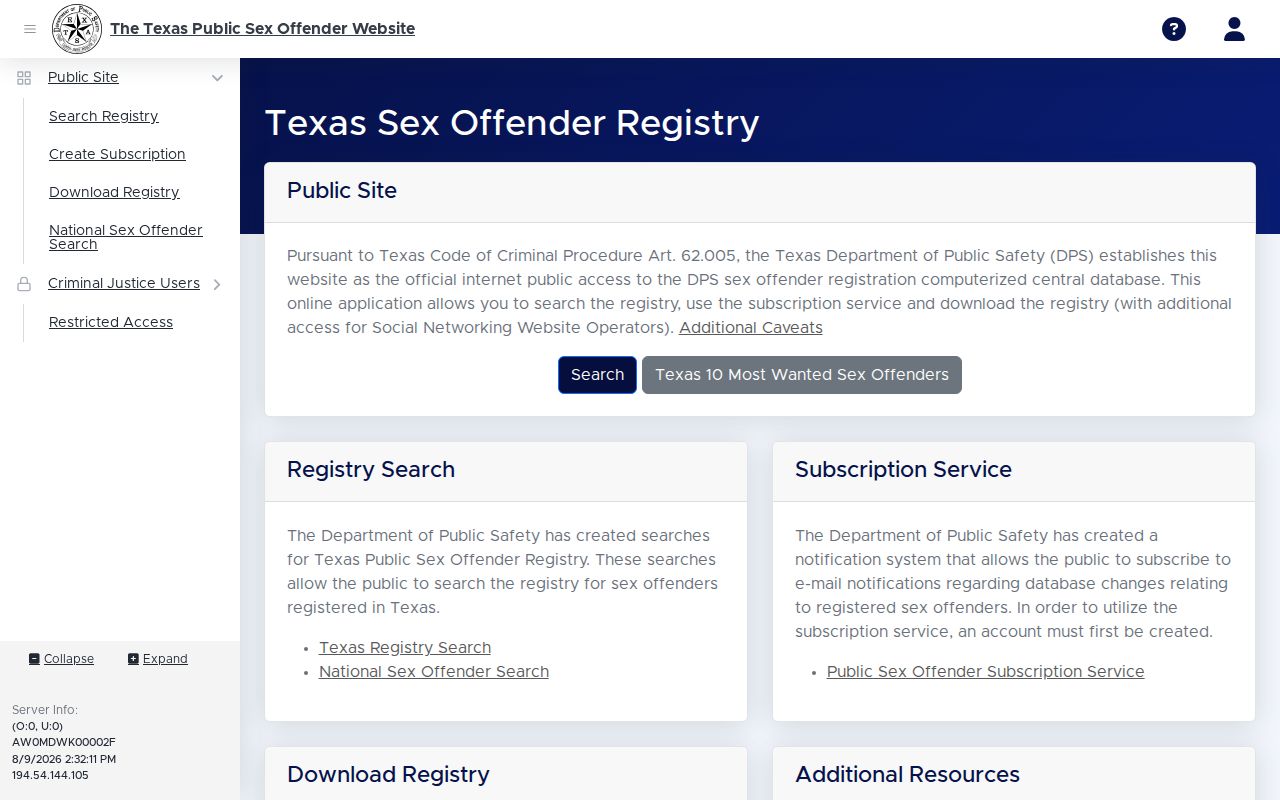
Switching from the map to the profile helps prevent a reader from drawing a conclusion from a pin alone.
Note: A map result is a search lead, not proof that an address, status, or registration duty has stayed unchanged.
Inside a Registry Profile
A public DPS profile combines identifying traits, registration facts, and offense information. Read the fields as one record. A photo and physical description can help distinguish people with similar names. The address and its status describe what the agency reported. Offense and conviction or adjudication fields describe the event that created the duty. Compliance and registering-agency fields help identify the right office for a question.
| Name and Aliases | Public names and alternate names tied to the registry record |
|---|---|
| Photo and Description | Photograph, sex, race, age or date of birth, height, weight, hair, eyes, and public scars, marks, or tattoos |
| Registered Address | Reported address plus the public address status |
| Offense Details | Description or statute, conviction or adjudication date, and public victim age and sex category |
| Risk Information | Risk level where one has been assigned under Texas rules |
| Registration Status | Compliance information and the agency responsible for the registration |
| Other Public Details | Certain vehicle or institution information when shown by DPS |
DPS does not make every field public. Social Security numbers, driver-license numbers, phone numbers, online identifiers, victim-identifying data, and certain employer or confidential DPS data stay out of the public view. A court may also restrict juvenile information. Those omissions are part of the legal design, not proof that a Hopkins County profile is incomplete.
Hopkins County Registry Field Limits
The boundary between a public profile and a law-enforcement file matters. Chapter 62 makes most registration information open for safety and awareness, but it protects specified private data. A public user should not try to fill those gaps through unofficial lists. The DPS record is the proper source for public fields, and the registering authority is the source for a suspected error.
Use the profile date as a cue. If the address, status, or physical description seems stale, save the exact field in question and report it to the listed agency. Do not claim that a public omission means a person failed to report. Some details are withheld by law, some can be restricted by court order, and others may be in the process of verification. Hopkins County law enforcement can assess the concern with the nonpublic record that a public searcher cannot see.
Texas Registration Levels and Requirements
Texas registration length turns on Chapter 62's reportable-offense and supervision rules. It is not a simple public chart of federal Tier I, II, and III labels. Some adult categories require registration for life. Other adult reportable convictions or adjudications generally carry a ten-year period after release or discharge from supervision. Juvenile duties depend on the statute and court order, and public access may be restricted. Texas also recognizes duties imposed by another jurisdiction under its extrajurisdictional rules.
| Texas Category | General Duration | Public Visibility |
|---|---|---|
| Adult lifetime or other Chapter 62 lifetime category | Life | Most registration data is public unless a specific restriction applies |
| Other adult reportable conviction or adjudication | Generally ten years after release or discharge from supervision | Public under Chapter 62 subject to protected fields |
| Juvenile registration | Depends on statute and court order | Public status may be restricted |
| Extrajurisdictional registrant | Texas recognition and the underlying duty control | Depends on the Texas registration determination |
A risk assessment can influence community notice, but it does not replace the duration rules. Verification frequency also depends on the person's legal category. Since the research did not establish one universal check-in schedule for all Hopkins County registrants, the profile and registering agency are the sound sources for a specific duty.
Hopkins County Registry Notifications
Texas uses more than one form of public notice. DPS describes English and Spanish postcard notice when it is told that a civilly committed sexually violent predator or an assigned high-risk offender will enter a community. Local authorities also notify schools when Chapter 62 requires it. These notices are tied to legal categories and official reports. They should not be treated as a complete list of everyone who has a Hopkins County registration duty.
The Texas Sex Offender Registration Program overview sets out the state role and the local registration framework.
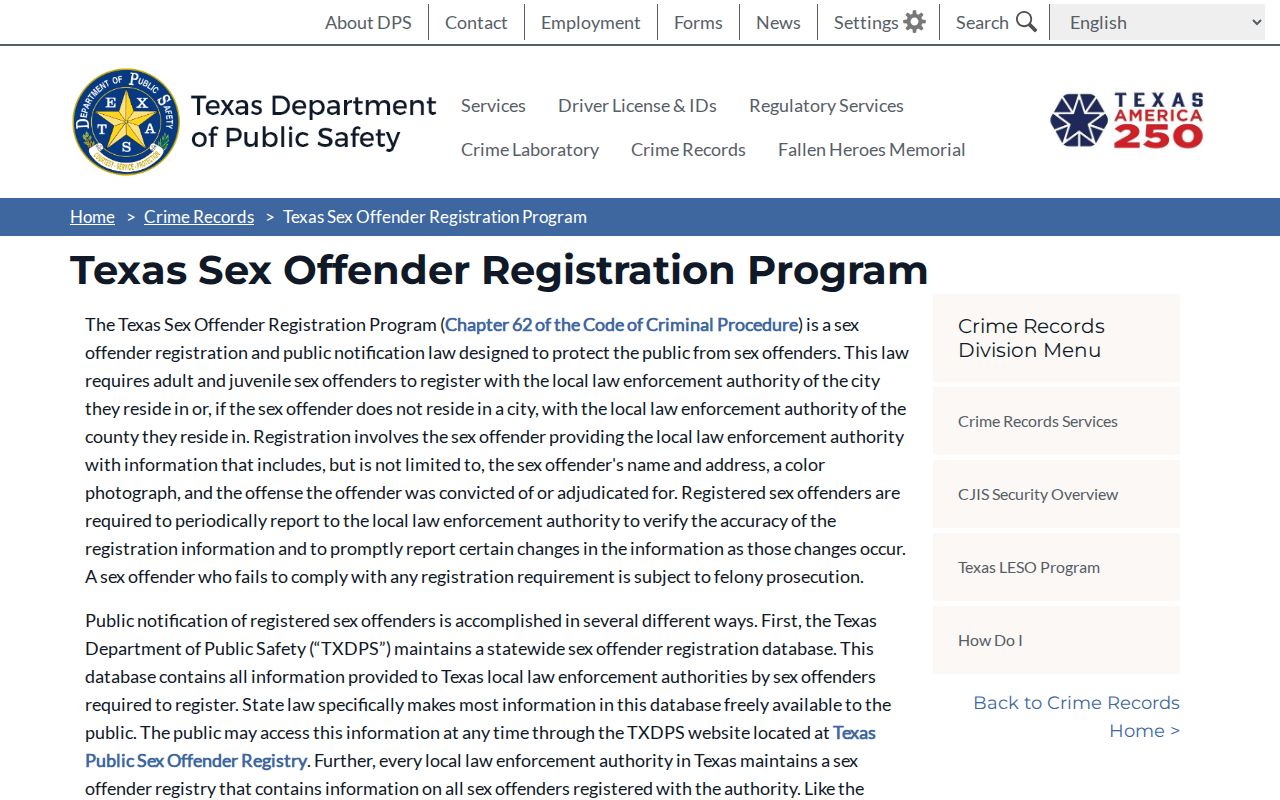
The state program page provides the policy context behind the Hopkins County entries shown in the public search.
Hopkins County and National Registry Search
The Texas registry is the best first source for a Hopkins County address because it presents Texas data and identifies the local registering agency. A person may have records tied to another state or federal jurisdiction, though. The U.S. Department of Justice National Sex Offender Public Website, commonly called NSOPW, supplies the official cross-state layer. It searches participating jurisdictions rather than replacing their source profiles.
The NSOPW national search is especially useful when a name or recent move crosses state lines.
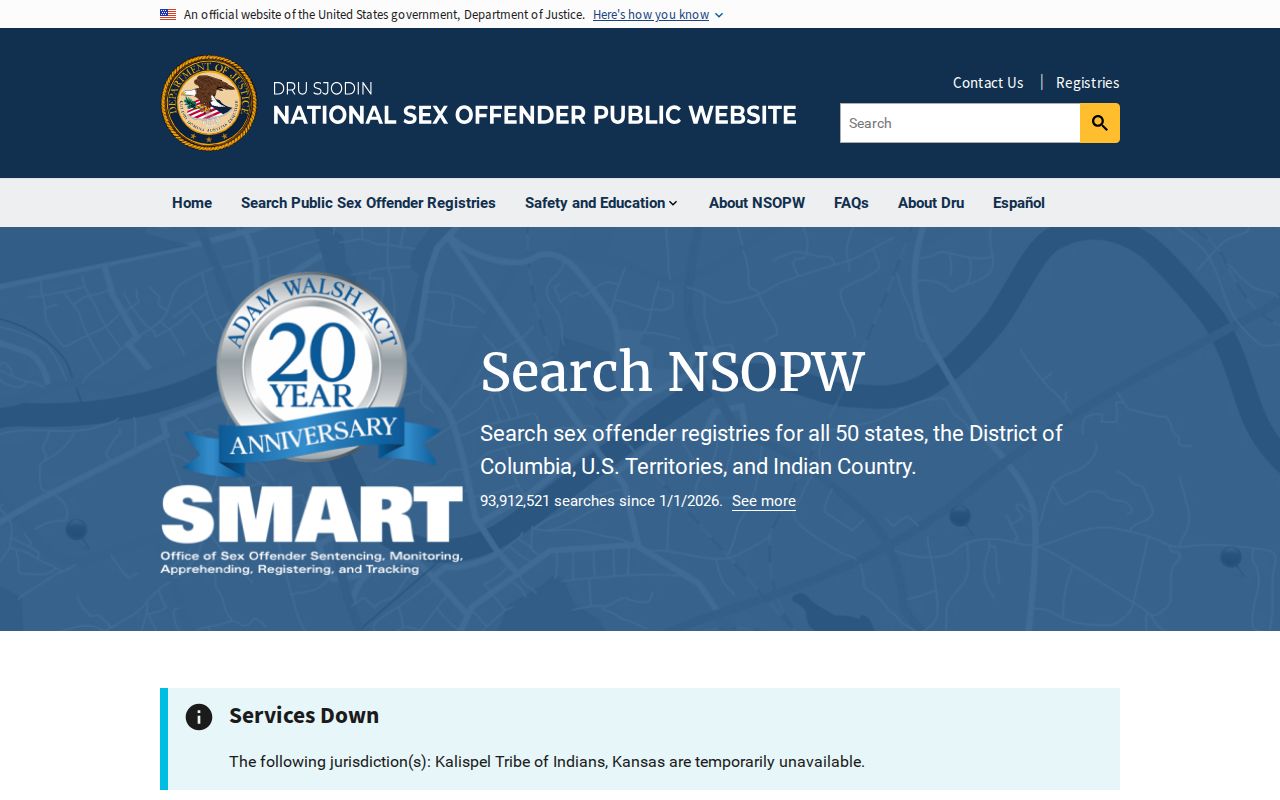
Return to the linked jurisdiction profile for the current status, field definitions, and contact agency behind a national result.
In practice, use DPS for the Hopkins County address and NSOPW for breadth. If the two views appear to differ, compare update dates and ask the agency named by the source record. A national result may lag or route back to state information, while a Texas profile may reflect the local report more directly.
Community Notification and Lawful Use
Registry information supports personal, family, and community safety planning. It does not authorize threats, contact, surveillance, or public accusation beyond what the record says. Texas Code of Criminal Procedure Chapter 62 governs registration and public notice. A profile records a legal duty and past qualifying event. It does not prove a new offense, predict present conduct, or erase the need to assess current facts.
Use registry records lawfully: Texas law prohibits using registry information to injure, harass, or commit a criminal act against a registrant or another person.
When a Hopkins County listing seems wrong, note the profile date and exact field, then call the named police department or Sheriff. Never contact the listed person. The official agency can check data that the public profile does not expose and can transmit a correction to DPS when warranted.
The official DPS search page is the final source to revisit before relying on a saved result.
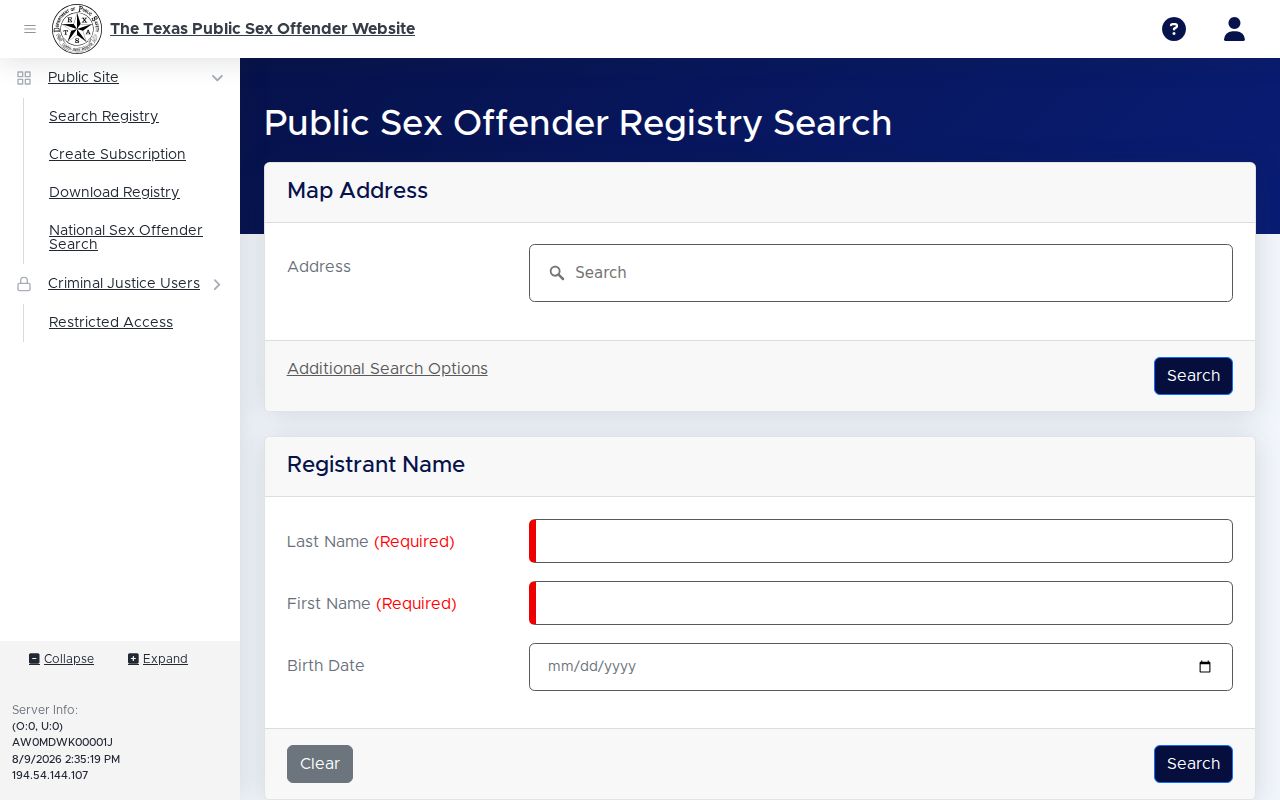
A fresh search and the responsible local authority provide a safer basis than an old screenshot, copied post, or private list.